Lucky Hand: A Whimsical Digital Font Set for Creative Projects
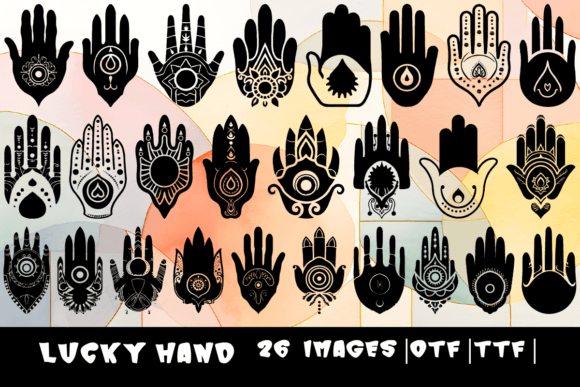
In the crowded landscape of digital design, finding a typeface that feels both personal and professional can be a challenge. Standard fonts often lack the character needed to make a project stand out, while overly decorative ones can become illegible or distract from the message. This is where Lucky Hand steps in as a unique solution. Specifically designed to bridge the gap between structured typography and free-spirited illustration, Lucky Hand offers a fresh approach to visual communication. It is not just another font file; it is a collection of 26 hand-drawn symbols, each corresponding to a letter from A to Z, crafted to inject personality into your work.
The core appeal of this set lies in its nature as a dingbat collection. Unlike traditional fonts where every letter is a uniform shape, Lucky Hand presents each character as a distinct, whimsical icon. Imagine typing "Hello" and seeing a hand-drawn sun for 'H', a leafy vine for 'E', and a playful creature for 'L'. This variety transforms simple text into an engaging visual narrative. For designers, marketers, and hobbyists alike, this tool provides an immediate way to elevate the aesthetic of a document without needing advanced illustration skills.
Understanding the Artistic Flair of Lucky Hand Dingbats
At its heart, Lucky Hand is about capturing the charm of analog art within a digital workflow. The term "dingbat" refers to a symbol used in typesetting, but Lucky Hand reimagines this concept for modern creativity. Each symbol is meticulously drawn to feel organic, slightly imperfect, and full of life. This imperfection is intentional; it mimics the human touch that vector graphics often struggle to replicate. When you apply these characters to a project, you are essentially embedding a piece of hand-crafted art into your layout.
The versatility of the set comes from its comprehensive coverage of the alphabet. With a dedicated symbol for every letter, users are not limited to short acronyms or single-word headers. You can spell out full sentences, names, or titles, creating a cohesive yet varied visual style. Whether you are designing a logo, a greeting card, or a social media graphic, the ability to mix and match these 26 unique elements allows for endless combinations. The result is a design that feels curated and thoughtful rather than generic.
Practical Applications for Designers and Creators
The true value of Lucky Hand becomes apparent when you consider real-world scenarios where standard fonts fall flat. For graphic designers working on branding projects, this font set offers a shortcut to a bespoke look. Instead of commissioning a custom illustrator for every element, a designer can use Lucky Hand to create unique monograms or decorative headers. For instance, a boutique coffee shop looking to update its menu board could use the font to highlight seasonal specials, giving the text a rustic, hand-painted vibe that aligns with their brand identity.
Event planners and invitation designers also find immense utility in this collection. Invitations are deeply personal documents, and the choice of typography sets the tone for the entire event. Using Lucky Hand for wedding invitations, birthday parties, or baby showers adds a layer of warmth and playfulness that serif or sans-serif fonts cannot achieve. Picture a bridal shower invite where the words "Bride to Be" are rendered as delicate floral sketches and soft curves. The font does the heavy lifting of setting a joyful, celebratory mood before the guest even reads the details.
Marketing and Branding Strategies
In the fast-paced world of digital marketing, grabbing attention is half the battle. Social media posts, blog headers, and email newsletters often suffer from visual fatigue because they rely on the same few web-safe fonts. Lucky Hand provides a strategic advantage by introducing visual variety. Marketers can use these dingbats to break up blocks of text, create eye-catching call-to-action buttons, or design unique icons for infographics.
Consider a lifestyle blogger writing about travel. Instead of using a standard bullet point list for their itinerary, they could use the Lucky Hand symbols to represent different destinations or activities. A plane icon for flights, a suitcase for packing tips, and a camera for photography spots. This not only makes the content more scannable but also reinforces the theme of the post through consistent visual language. Similarly, small business owners selling handmade goods can use the font on product packaging or tags to emphasize the artisanal quality of their items.
Educational and Personal Projects
Beyond commercial applications, Lucky Hand serves as an excellent resource for educators and parents. In educational settings, engagement is key, and children respond well to colorful, illustrative materials. Teachers can use the font to create flashcards, classroom posters, or worksheets that make learning the alphabet an interactive experience. Each letter becomes a puzzle or a drawing prompt, encouraging students to associate the character with the symbol.
For hobbyists and everyday users, the barrier to entry is low. You do not need to be a professional designer to benefit from this tool. If you are creating a scrapbook, a family newsletter, or a personalized gift tag, Lucky Hand allows you to add a professional polish to your DIY projects. The ease of use means that anyone with basic word processing or design software can incorporate these whimsical elements into their creations instantly.
Technical Compatibility and File Formats
A major consideration for any digital asset is compatibility. Lucky Hand addresses this by including both OTF (OpenType) and TTF (TrueType) file formats. This dual-format support ensures that the font works seamlessly across a wide range of operating systems and design software. Whether you are using Adobe Illustrator, Photoshop, InDesign, Microsoft Word, or Canva, you can install and utilize the font without technical hurdles.
The OTF format is particularly beneficial for professional workflows, offering advanced typographic features and better handling of complex layouts. Meanwhile, TTF remains a robust standard for general use, ensuring that files created on one system can be opened and edited on another without issues. This flexibility means that collaboration is smoother; a freelancer can send a design file to a client who uses different software, confident that the Lucky Hand elements will render correctly.
Choosing the Right Tool for Your Needs
Before integrating Lucky Hand into a project, it is important to consider the context and audience. While the playful nature of the font is a strength, it may not suit every situation. Formal legal documents, corporate financial reports, or serious news articles generally require more neutral, legible typefaces. The whimsical style of Lucky Hand is best reserved for creative, promotional, or personal contexts where emotion and personality are desired.
Additionally, users should think about scalability. Because the characters are detailed illustrations, they maintain clarity at larger sizes, making them perfect for posters, banners, and large print materials. However, at very small sizes, such as fine print on a receipt or tiny captions, the intricate details might lose definition. It is always advisable to test the font at the intended size before finalizing a design.
Ultimately, Lucky Hand is more than just a downloadable file; it is a creative partner. It empowers creators to move beyond the limitations of standard typography and embrace a more expressive form of communication. By combining the convenience of digital fonts with the charm of hand-drawn art, it opens up new possibilities for storytelling and design. Whether you are launching a new brand, planning a special event, or simply adding a bit of fun to your daily tasks, this collection offers the artistic flair needed to make your vision come to life.